Why Every Young Chess Player Should Meet Greatness: Lessons from Grandmaster Lalith Babu’s Session at Jignasa
Jignasa Owner ·
Jignasa Activity Centre · Nallagandla, Hyderabad· For Parents & Families
Music Classes · Kuchipudi Dance · Chess Classes · Public Speaking for Kids · Arts club
If you are a parent in Nallagandla, Tellapur, or anywhere in west Hyderabad exploring chess coaching for your child, you have probably asked the same questions most parents ask: Is it worth it? What will my child actually gain? And when does a chess class become something genuinely meaningful?
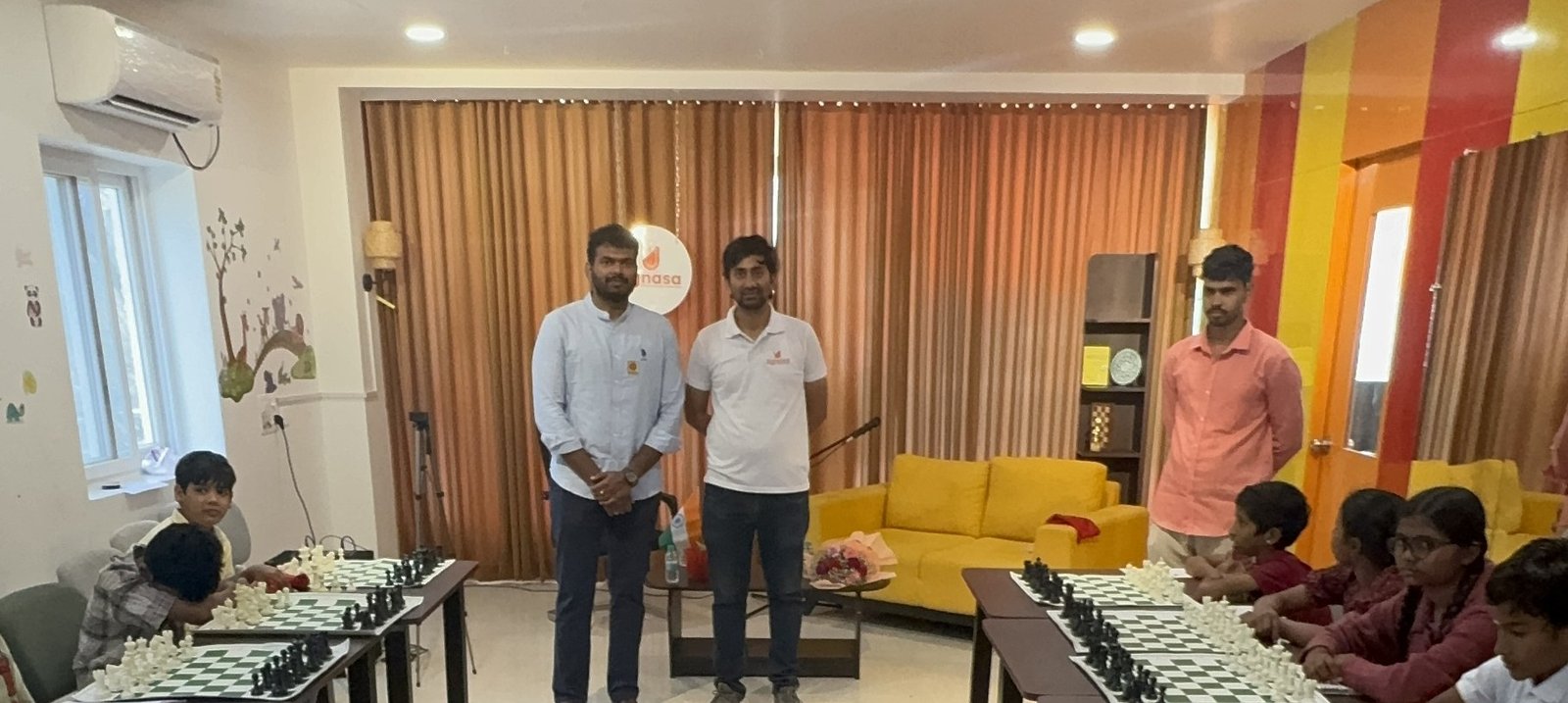
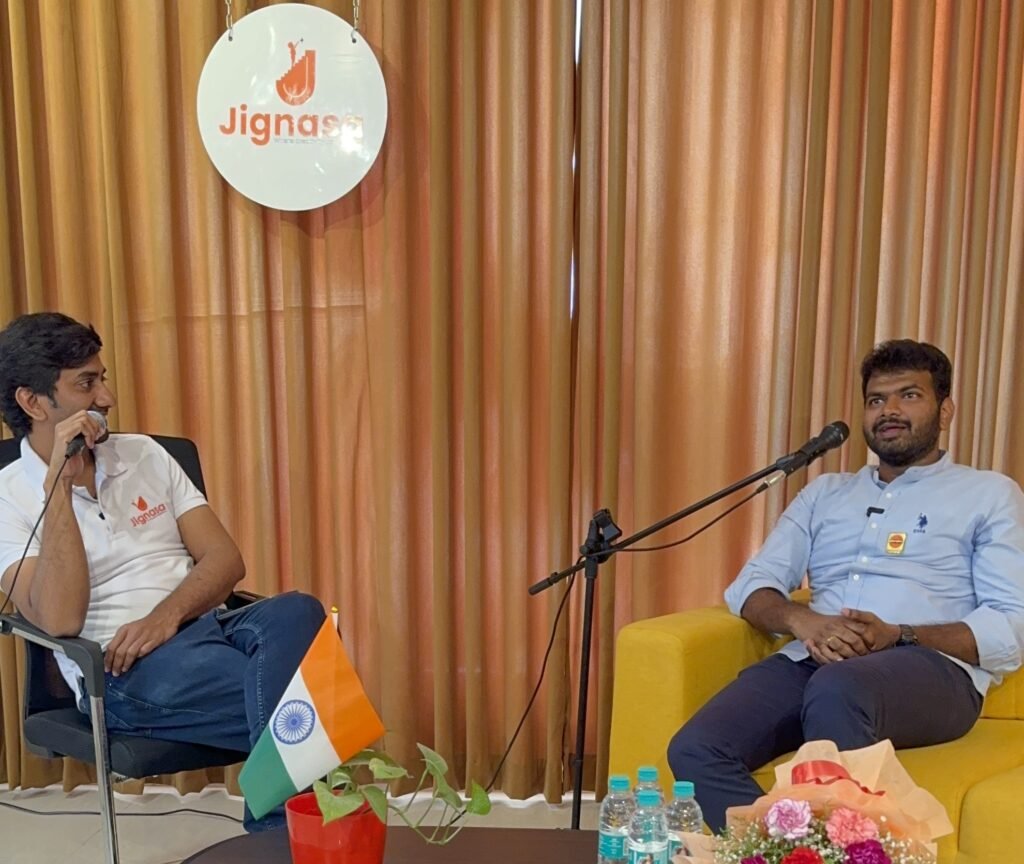
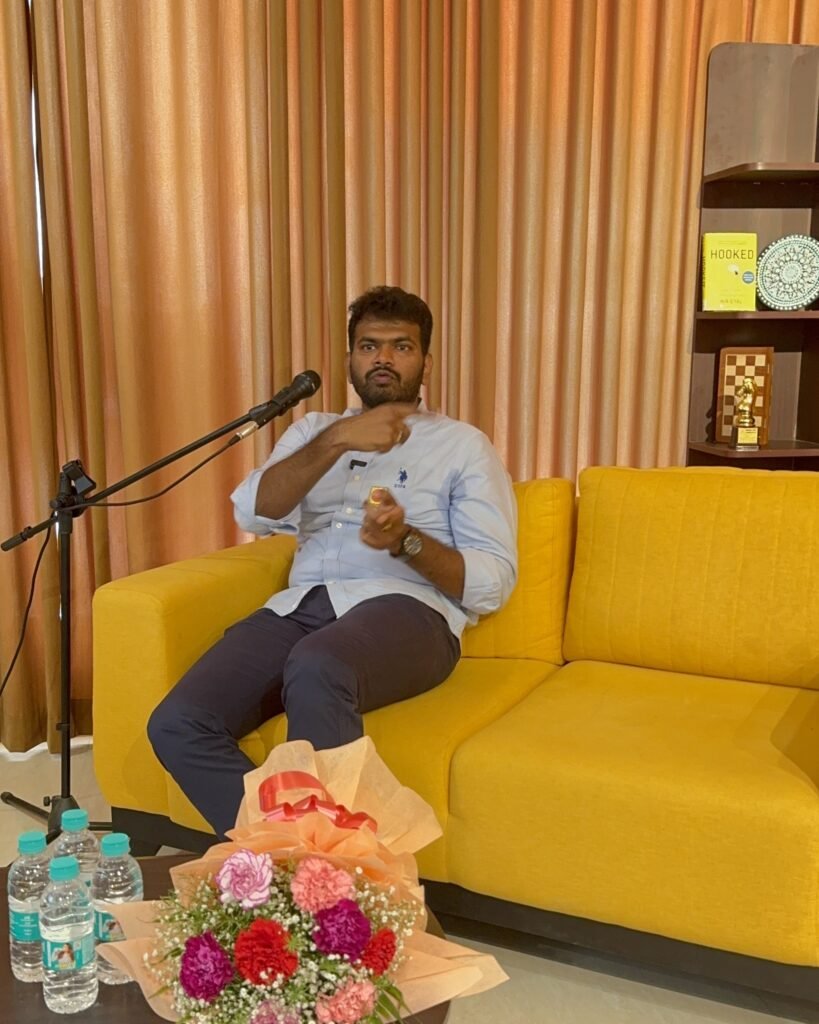
On 1 February 2026, something happened at Jignasa that speaks directly to those questions. Grandmaster Lalith Babu – India’s 26th Grandmaster and one of the country’s most accomplished chess players- spent two hours with our students in a session built around direct interaction, open conversation, and a simultaneous exhibition match against ten selected players.
This is the story of that morning. And an honest look at what chess coaching for children can do for your child.
Why Exposure to Greatness Changes a Child’s Relationship with Chess
Think about two young cricketers. Both have watched Sachin Tendulkar on television. Both know the records. But one of them has actually met him – shaken his hand, looked him in the eye, asked a question and received a real answer.
That child does not just admire the achievement. They believe, in a way the first child cannot fully access, that it is possible for them too. The success is no longer abstract. It belongs to a person with a face and a story — and that makes it something a child can actually reach toward.
The same principle applies in chess. Most children enrolled in chess training – whether in Nallagandla, Tellapur, Lingampally, or anywhere else – spend their learning years with coaches, books, and online games. All valuable. But when a child interacts with a Grandmaster directly, something shifts in how they see the game and themselves within it.
“Children often remember not the lesson – but the moment. Asking a Grandmaster a question. Seeing confidence at close range. Playing a move against someone operating at the highest level of the game.”
What Happened During the Grandmaster Session at Jignasa
The morning was designed to be active rather than passive — built around three distinct experiences.
Student Interaction and Q&A
Students had direct, open access to GM Lalith Babu. The conversation covered what serious improvement actually involves, how strong players think during a game, what tournament preparation looks like at the highest level, and — importantly — how to handle losses. For children who sometimes find defeats discouraging, hearing a Grandmaster speak candidly about failure and recovery was itself a lesson.
The questions students asked were the ones they carry every day: How do you stay focused when a game is long? What should a beginner prioritise? How do you come back after a difficult loss? No book answers those questions the same way a person who has lived them can.
“I was nervous before sitting down to play. But the moment I made my first move, I forgot about being nervous. I just wanted to find the best move I could.”
– Student, Jignasa Chess Programme
The Simultaneous Exhibition
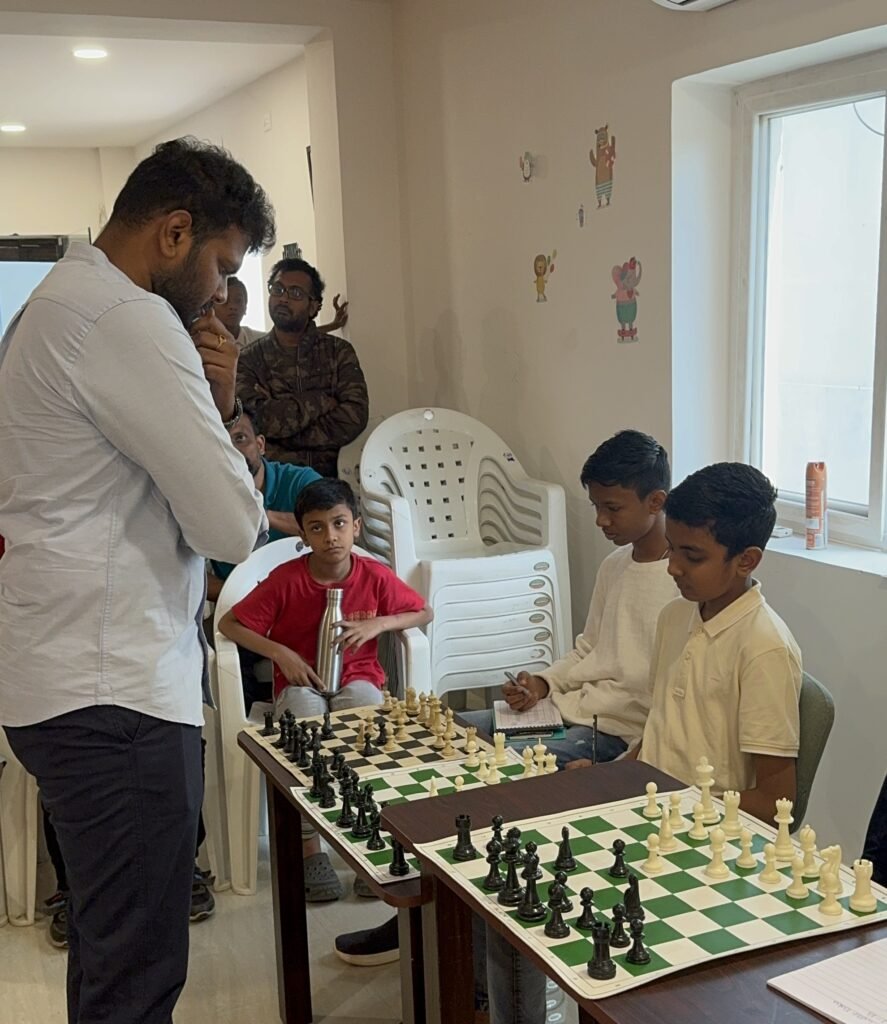
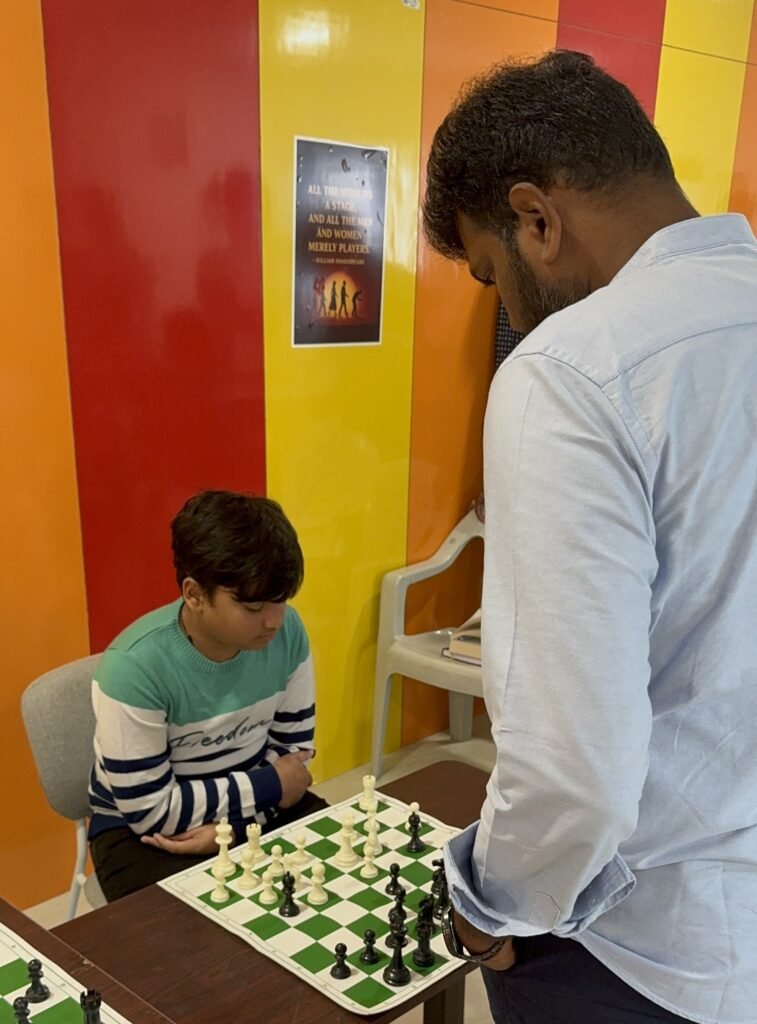
Ten selected students from our chess classes in Nallagandla played against GM Lalith Babu simultaneously – a format called a simul, in which the Grandmaster moves from board to board, assessing and playing before stepping to the next.
For the students involved, this was a first. Playing someone who operates at Grandmaster level is a different experience from anything that happens in practice or peer competition. The precision of the planning, the quality of the decision-making – all of it is felt immediately, even by young players who cannot yet fully articulate what they are encountering.
“The session changed how I think about practice. I always thought I was working hard. After playing the Grandmaster, I understood what working hard actually means.” – Student, Jignasa Chess Programme
Most students lost, as is expected. What they gained was harder to measure and far more valuable: a close-range view of what strong chess looks like from the other side of the board.
According to our coaches, many students left the session with a noticeably different attitude toward practice. The effort felt more purposeful. The goal felt more real. Several students asked to increase their training sessions in the days that followed.
How Chess Helps Children Beyond the Chessboard
As a parent considering chess coaching for your child , the honest answer is this: chess will not teach your child algebra. What it will teach them is how to think – and that is a far more durable gift.
- Concentration : Chess trains sustained focus from start to finish. This carries directly into classrooms and study habits.
- Strategic Thinking : Chess rewards planning ahead. Children learn to see consequences before they act – in the game and in life.
- Emotional Control : Reacting impulsively almost always makes a bad position worse. Chess teaches restraint and composure.
- Pressure Management : Timed play requires decisions when certainty is not available. That is a life skill far beyond the board.
- Pattern Recognition : Chess is built on patterns. Recognising them quickly strengthens the same cognitive ability used in mathematics and reading.
- Academic Crossover : Focus, planning, patience, and working memory – all trained through chess, all transferable to school performance.
One important distinction for parents: chess is not a tutoring supplement. It builds the underlying capacity to engage with difficult material — through play, competition, and the genuine motivation that comes from loving a game. Children do not experience it as effort the way they might experience extra homework. They experience it as something they want to do.
What Parents Often Notice After Six Months of Chess
The changes parents observe are rarely dramatic. They accumulate quietly – in small, consistent shifts in how a child approaches problems, handles setbacks, and engages with learning. After six months of structured chess coaching for kids, this is what parents at Jignasa most commonly report:
📖 Better focus during homework and reading
🧘 More patience — fewer knee-jerk reactions
🏆 Stronger confidence in competitive settings
💬 More thoughtful decision-making at home
😤 Less frustration after losing or making mistakes
None of these outcomes are guaranteed. They depend on the quality of the programme, the consistency of the child’s practice, and the environment around them. But they are what good chess coaching, done well, tends to produce- and they are what parents in Nallagandla, Tellapur, and Serilingampally consistently tell us they see.
What Makes a Chess Programme Worth Enrolling In
Not all chess classes are equal. A weekly session that covers piece moves and basic tactics is a starting point – not a development programme. What actually builds a child as both a chess player and a thinker is an environment where multiple things work together.
The Jignasa Chess Ecosystem
Strong chess development requires all five elements: a structured curriculum, consistent practice through games and puzzles, tournament exposure from an early stage, experienced mentorship, and – crucially – inspiration through access to accomplished players. The GM Lalith Babu session was the inspiration layer. It matters as much as any of the others.
Tournaments, in particular, are something many parents underestimate. Our internal chess tournaments give students the experience of competitive play in a supportive setting long before they face the wider circuit. Competing- even as a beginner, even with a loss – accelerates growth faster than any number of practice sessions alone.
Chess Classes in Nallagandla, Tellapur, and Serilingampally
Families searching for chess classes in Nallagandla or chess coaching for kids in Tellapur often look for programmes that offer more than weekly lessons. They want structure, progress, and- increasingly – the kind of exposure that shows a child where dedicated effort can lead.
Jignasa serves families across Nallagandla, Tellapur, Madinaguda, Lingampally, BHEL, and Serilingampally from our centre in Nallagandla. Our chess academy is designed for children from age five upward, with a curriculum that moves from beginner foundations through to competitive tournament play.
For parents in west Hyderabad looking for chess training for children that goes beyond the basics – a programme that tracks progress, prepares students for tournaments, and occasionally brings in a Grandmaster – Jignasa is built to be that programme.
Why We Invited a Grandmaster to Jignasa
The honest answer is that we believe exposure matters as much as instruction.
A child can learn how to move pieces. They can study openings, solve puzzles, and improve their rating. But none of that fully answers the question every young chess player eventually asks: Is this worth pursuing seriously?
Meeting a Grandmaster answers that question in a way no lesson can. It makes the pursuit real. It makes the destination visible. And for many children, it is the moment that transforms chess from something they do on Tuesday afternoons into something they care about.
The GM Lalith Babu session was not a one-off event designed to generate content or tick a box. It reflects a commitment we hold at Jignasa: that students at our chess classes in Nallagandla deserve access to the same calibre of experience that children at elite chess academies anywhere in India receive. We plan to continue creating these opportunities — through further Grandmaster interactions, competitive exposure at Hyderabad-level tournaments, and mentorship structures that grow with each student.
Questions Parents Ask Most
At what age should my child start learning chess?
Can chess improve memory in children?
Can a 5-year-old learn chess?
How many chess classes per week are ideal?
What makes a good chess coach?
How long before I see real progress in my child?
Are chess classes in Nallagandla worth it?
The Lesson That Stayed in the Room
The most lasting thing from Grandmaster Lalith Babu’s visit was not a particular opening or tactical idea. It was simpler — and more powerful. It was the sight, at close range, of what years of dedication and genuine love for a game can produce.
“For many children, meeting a Grandmaster may be the moment that transforms chess from an activity into a lifelong pursuit. At Jignasa, we intend to keep creating those moments.”
Give Your Child That First Moment

Give Your Child the Gift of Thinking Ahead
Chess is more than a game. It teaches children how to focus, plan, stay patient under pressure, and make thoughtful decisions—skills that benefit them far beyond the chessboard.
At Jignasa, children don’t just learn how pieces move. They learn through structured coaching, puzzle-solving, practice games, tournaments, and opportunities to interact with accomplished players who inspire them to aim higher.
Whether your child is taking their first steps into chess or looking to grow as a competitive player, our programme is designed to support their journey at every stage.
What Your Child Can Expect
✓Why Parents Choose Jignasa Chess
✓ Structured coaching
✓ Tournament exposure
✓ Experienced coaches
✓ Grandmaster interactions
✓ Supportive learning environment
Curious if Chess is Right for Your Child?
Speak with our team on WhatsApp to learn more about our chess classes in Nallagandla and find the right batch for your child.
Jignasa Activity Centre · Nallagandla, Hyderabad · Music Classes · Guitar Classes · Keyboard Classes · Kuchipudi Dance · Chess Classes · Public Speaking for Kids · Arts club