What Is The Ideal Age To Start Learning Musical Instruments?
Jignasa Owner ·
Jignasa Activity Centre · Nallagandla, Hyderabad· For Parents & Families
Guitar · Keyboard · Violin · Tabla · Flute · Drum Pad ·
Personalised music classes for kids in Nallagandla & nearby — book a free trial today.
The most common question parents ask before enrolling their child in music is: “What is the right age to start?” The honest answer is that there is no single number. What matters more than age is readiness — a child’s curiosity, attention span, physical comfort with an instrument, and willingness to engage with structured learning.
This guide breaks down exactly what readiness looks like at different ages, which instruments suit which stage, and how to know when your child is ready to begin.
There Is No Single “Right Age” — Readiness Matters More
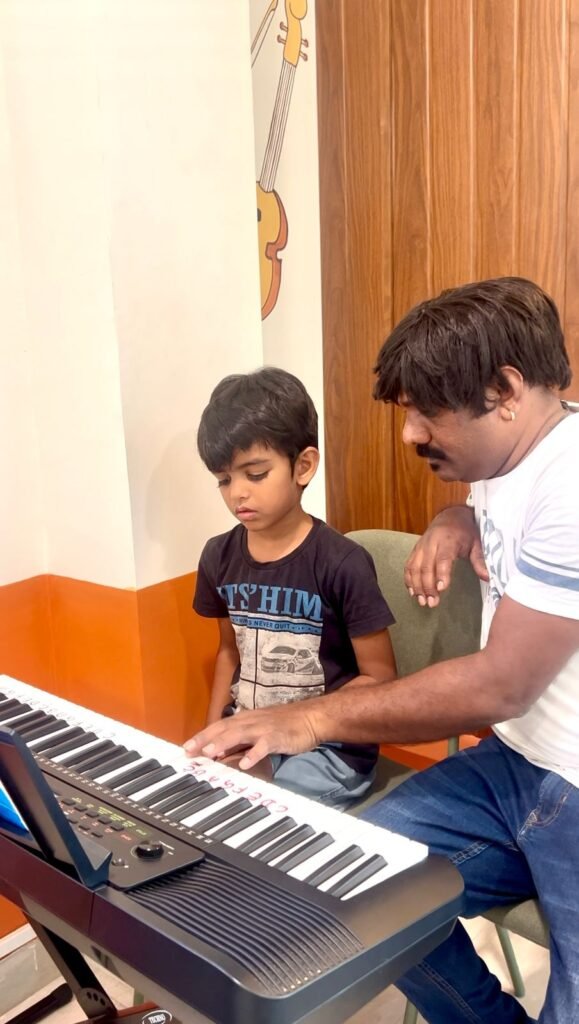
Children develop at strikingly different rates. Two seven-year-olds in the same class can have very different attention spans, coordination levels, and emotional readiness for instruction. Anchoring on a specific age can lead parents to either push too early or hold back unnecessarily.
A child’s curiosity, patience, and willingness to explore are better indicators of readiness than their age on a birth certificate.
That said, age is still a useful starting point — particularly when choosing an instrument. Physical readiness is real, and some instruments genuinely suit older beginners more than younger ones. Understanding both sides of the equation is what leads to the right decision.
Attention Span & How Young Children Learn
Children between three and six learn through movement, play, and short bursts of focus — not formal instruction. Expecting a five-year-old to sit through the same kind of lesson as a ten-year-old will frustrate everyone involved.
For younger beginners, short structured segments (10–15 minutes) followed by playful exploration work far better than long drills. Rhythm games, call-and-response activities, and movement-based learning keep engagement high and build a genuine, joyful relationship with music before technique ever enters the picture.
At Jignasa
Sessions for younger children are structured in shorter learning cycles — focused instruction followed by playful musical interaction — so the experience stays positive and pressure-free from the very first class.
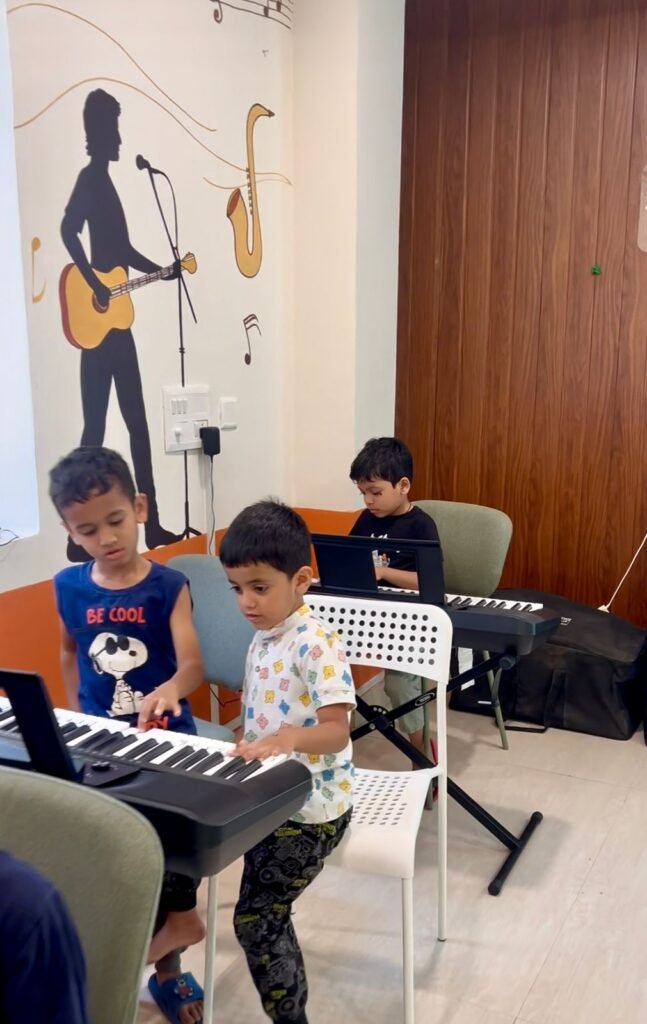
Physical Readiness: Why It Matters Before You Choose An Instrument
Before looking at specific instruments, it is worth understanding one principle that shapes everything below: physical readiness matters as much as emotional readiness . Finger strength, breath control, posture, and the ability to safely handle an instrument are real factors — not barriers, but things a good teacher accounts for from the start.
Not all instruments are equal for young hands
For very young beginners, instruments that require no significant hand strength or precise postural control — keyboard, recorder, drum pad — are naturally the most accessible. They deliver an immediate, rewarding musical experience while the child’s body continues to develop.
Guitar and finger sensitivity
Steel guitar strings can be uncomfortable, and unsafe for children under seven because young fingertips are still highly sensitive and lack the skin calluses that make string pressure manageable. Most educators recommend waiting until around age 7–8, when finger strength and skin adaptability have improved. Nylon-string classical guitars are a gentler alternative for younger starters who are eager to begin earlier.
Instrument sizing is a practical safety consideration
An oversized guitar or a violin that forces a child to stretch uncomfortably will create fatigue and quietly erode enthusiasm. Child-sized instruments are not optional extras — they are the correct tool for the age. A good mentor will always confirm instrument fit before the first session.
Instrument Guide: Recommended Starting Ages
With physical readiness in mind, here is a practical overview of each instrument — including honest age guidance for when most children are ready to begin structured learning.
Keyboard & Piano
From age 5
- No finger strength required to produce sound
- Visual, logical layout — ideal for beginners
- Builds music theory naturally from day one
- Most beginner-friendly starting point overall
Guitar
From age 7–8
- Needs developing finger strength & skin calluses
- Nylon strings gentler for younger starters
- Builds rhythm, consistency, and patience
- High creative and commercial appeal for kids
Tabla
From age 6–7
- Excellent for rhythm development and coordination
- Great outlet for energetic, percussion-drawn children
- Develops deep listening and timing instincts
- Rooted in Indian classical tradition
Flute & Recorder
From age 8
- Recorder is one of the gentlest early instruments
- Flute needs more developed breath control
- Both sharpen listening precision and patience
- Lightweight and easy to handle safely
Violin
From age 5–6
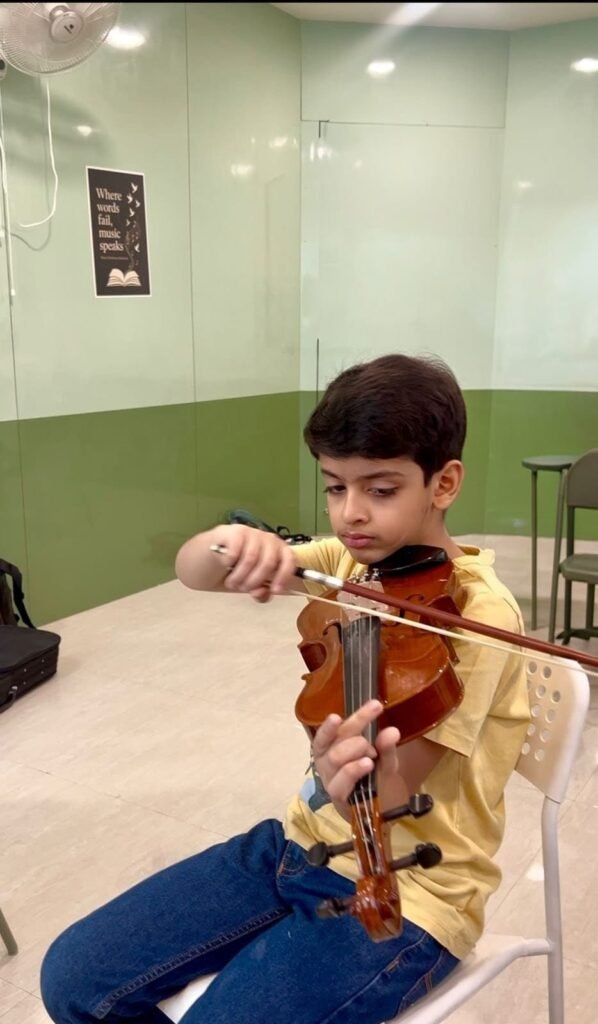
- Child-sized instruments make early starts viable
- Builds posture, discipline, and ear training
- Requires consistent, proper mentorship from day one
- One of the most rewarding long-term instruments
Drum Pad
From age 4–5
- Among the lowest barriers to entry for any age
- Builds timing and coordination almost immediately
- Fun, energetic, and naturally engaging
- A natural gateway toward full drum kit learning
What Music Does To A Developing Brain:
The benefits of learning music for children extend well beyond the ability to play a tune. Learning an instrument requires a child to simultaneously track rhythm, coordinate both hands, and listen to their own sound — which is exactly the kind of divided, sustained attention that music classes that improve concentration in kids are quietly training in every session.
Children who engage with music regularly show stronger phonological awareness (a foundation for reading), improved working memory, better emotional self-regulation, and a measurable increase in academic confidence. These are not side effects — they are direct outcomes of how music learning works neurologically. The instrument is almost secondary to what the practice of learning it builds.
How To Know If Your Child Is Ready?
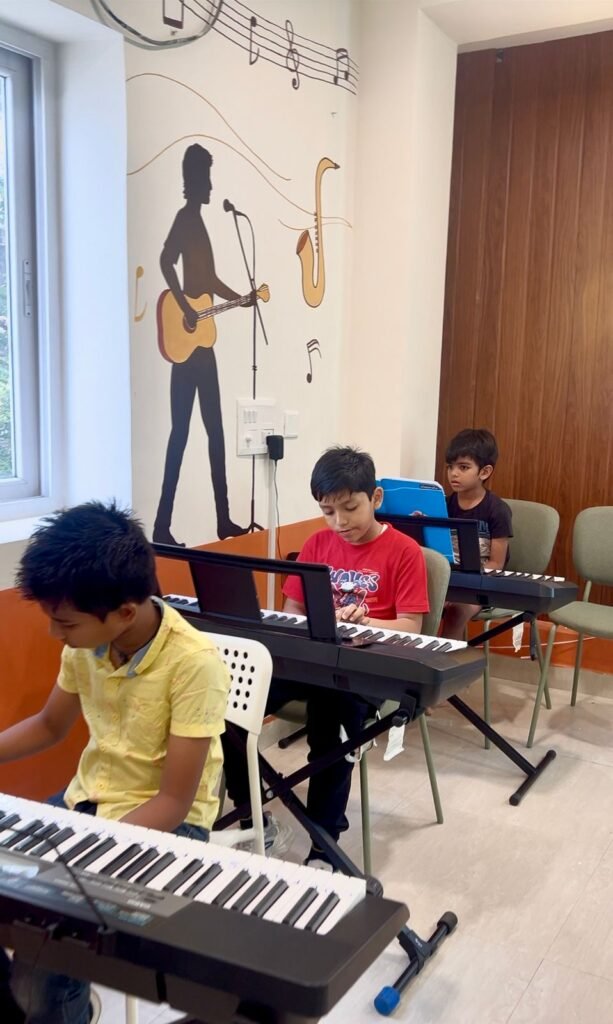
Knowing how to tell if your child is interested in music is sometimes more instinct than science. Watch for these signals:
- Willing — even eager — to try a trial session
- Curiosity toward instruments — wants to touch or ask about them
- Spontaneously taps, claps, or hums along to music
- Responds emotionally — dances, goes still, asks to replay a song
- Enjoys music activities at school or home
Even a subtle, passing interest is worth exploring. A single trial session often tells you everything a month of deliberation cannot. Child Prodigies await opportunities, that arise out of your attention!
Common Mistakes Parents Make Early On
- Expecting fast results Early sessions build invisible foundations — listening, coordination, confidence — that compound over time. Visible progress follows; it simply takes longer than parents expect.
- Comparing children A younger child should never be benchmarked against an older student with stronger motor control, a longer attention span, and more developed practice discipline. The baselines are simply different.
- Forcing long practice sessions For under-sevens, 10–15 focused, enjoyable minutes daily is more effective than a reluctant hour. Consistency matters far more than duration.
- Choosing instruments by trend What looks impressive, or what a friend’s child plays, may not suit your child’s temperament or physical readiness. Let curiosity lead wherever possible.
Also At Jignasa · Nallagandla, Hyderabad
Music is one of many ways children grow at Jignasa. If you are looking for extracurricular activities for kids in Nallagandla beyond music — or your child has a wider range of interests — we also offer structured programmes in classical dance, cognitive skills, and communication arts. Each is designed with the same philosophy: personalised, age-appropriate, and genuinely suited to the child.
Kuchipudi Dance Classes Public Speaking for Kids Chess Classes View All Programmes →
Choosing Music Classes In Nallagandla & Nearby
If you are based in Nallagandla, Tellapur, Kondapur, Gopanpally, or anywhere along the Hyderabad west corridor — near JNTU Hyderabad or the Financial District — the quality of the mentor is the single most important variable when choosing a class. A great early-years music teacher adapts to each child’s energy and pace in real time, which is a fundamentally different skill from teaching older, self-motivated students.
At Jignasa, our keyboard classes for kids in Hyderabad, guitar classes for beginners in Nallagandla, violin classes for beginners in Nallagandla, Tabla classes for children in Hyderabad, flute classes for kids near me, and drum pad sessions are all built around the individual child. Whether you are searching for after-school classes near Nallagandla , kids activity classes in Kondapur , or the best personalised music programme near you — we would love to have your child visit for a free trial.
Start With A Free Trial At Jignasa Today!
We offer personalised music classes in Nallagandla for children of all ages. No pressure, no rigid syllabus — just the right start.
Book A Free Trial to Explore All Programmes
Jignasa Activity Centre · Nallagandla, Hyderabad · Music Classes · Guitar Classes · Keyboard Classes · Kuchipudi Dance · Chess Classes · Public Speaking for Kids · Arts club